
Gyms have been filling up with machines for decades. Chest press machines, leg press stations, cable crossovers, Smith machines — there's always something new promising to make training easier, safer, or more effective. And yet the most consistently well-trained people in any gym are almost always the ones spending most of their time with free weights.
That's not nostalgia. It's biomechanics. Free weights require your body to stabilise the load, coordinate multiple muscle groups, and move through natural ranges of motion. Machines remove most of that demand. The result is that free weight training produces broader, more transferable strength adaptations — and the research has been saying so for a long time.
Here's a proper look at the free weight options available, what each one is actually good for, and how to build a setup that serves you for years.
Barbells: The Foundation
If you're going to own one piece of free weight equipment, make it a barbell. The squat, deadlift, bench press, overhead press, and barbell row — the movements that build the most total muscle mass and strength — are all barbell-based. Nothing else comes close for loading the body progressively over the long term.
A 2017 meta-analysis in the Journal of Strength and Conditioning Research confirmed that free weight compound movements produce superior strength and hypertrophy outcomes compared to machine-based training, primarily due to greater neuromuscular recruitment and stabiliser involvement. (Schwanbeck et al., 2017)
Choosing the Right Bar
The standard for most training is a 20kg Olympic barbell — the right length for a power rack, the right weight for most programs, and built to handle serious loads. Our Olympic Barbell Bright Hard Chrome 20kg is the workhorse of the range. Bright hard chrome finish means it holds up to regular use and the Queensland humidity without corroding.
If you're training with lighter loads, introducing younger athletes to barbell work, or running a facility that needs a progression option, the 10kg Training Bar and 15kg Bar fill that gap. Same Olympic sleeve diameter, lighter total weight — useful for technique work and for athletes who aren't ready for a full 20kg bar.
Specialty Bars Worth Knowing About
Beyond the standard straight bar, two specialty bars are worth having in most setups.
The Trap Bar (Open End V2) is one of the most underrated pieces of equipment in any gym. The hexagonal frame lets you deadlift with a neutral grip and a more upright torso position, which reduces lower back stress compared to a conventional deadlift. Research published in the Journal of Strength and Conditioning Research found that trap bar deadlifts produced greater peak force and power output than straight bar deadlifts, making them a strong option for athletes and general population clients alike. (Swinton et al., 2011) The open-end design means it works in tighter spaces than a closed hex bar.
The Olympic EZ Curl Bar is the standard for bicep curls and tricep work — the angled grip reduces wrist strain compared to a straight bar, which matters when you're doing high-rep isolation work. Worth having in any facility that runs general fitness programming.
Bar Storage
Barbells left on the floor get damaged and create trip hazards. A Barbell Wall Rack (8 Bar) keeps bars off the floor and accessible — a clean solution for commercial facilities. The 10 Bar Vertical Rack and 9 Bar Holding Rack are freestanding alternatives if wall mounting isn't practical. For smaller setups, the 2 Bar Vertical Rack handles a home gym's bar collection without taking up much floor space.
Weight Plates: More Options Than You'd Think
Plates are plates until you start thinking about what you're actually doing with them — then the differences matter.
Bumper Plates
Bumper plates are rubber-coated and designed to be dropped. If your training includes Olympic lifting, deadlifts from the floor, or any movement where the bar comes down fast, bumpers are the right choice. They protect the bar, the floor, and the plates themselves.
We stock bumper plates in multiple configurations. The Coloured Bumper Set 70kg is a practical home gym starting point. The 100kg Set, 120kg Set, and 150kg Set scale up for more advanced lifters and commercial facilities. Colour coding by weight makes loading faster — a small thing that adds up across hundreds of sessions. Individual bumper sets are also available: 5kg x 10 and 10kg x 10 for facilities building out their plate inventory incrementally.
Olympic PU Plates
For bench pressing, overhead pressing, and accessory work where the bar isn't being dropped, PU-coated Olympic plates are a durable and quieter alternative to bumpers. Our PU Olympic Weight 5kg Pair and 10kg Pair are the standard loading plates for these movements.
Fractional Plates
This is the one most people skip and then wish they hadn't. Fractional plates allow you to add load in increments smaller than the standard 2.5kg jump — which is critical for maintaining progressive overload on upper body lifts where strength gains slow down. Adding 5kg to a bench press every week is not sustainable past the beginner stage. Adding 1kg is. Our 1kg Fractional Plates are the practical solution — keep a pair on the bar and make progress that's actually achievable.
Plate Storage
An Olympic Weight Plate Tree keeps your plates organised and off the floor. In a commercial setting this is a safety and housekeeping necessity. In a home gym it just makes the space more functional.
Dumbbells: Versatile, Accessible, Irreplaceable
Dumbbells are the most used piece of equipment in most gyms, and for good reason. The unilateral loading (one side at a time) addresses strength imbalances that bilateral barbell work can mask, the greater range of motion on pressing movements is a genuine advantage for chest development, and the variety of exercises available is essentially unlimited.
Research in the Journal of Human Kinetics found that unilateral dumbbell training produced comparable strength gains to bilateral barbell training, with the added benefit of greater core activation and improved neuromuscular coordination. (Saeterbakken et al., 2011)
Individual Pairs vs. Full Sets
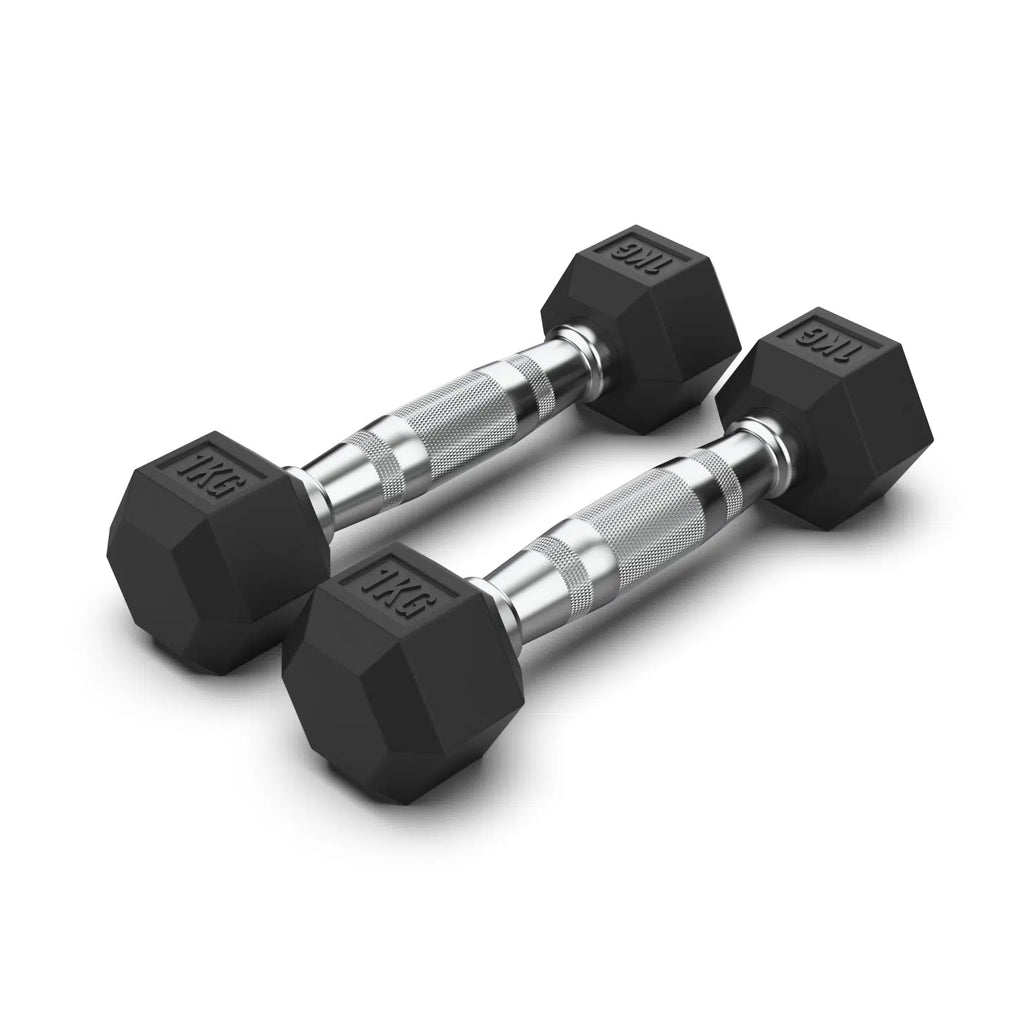
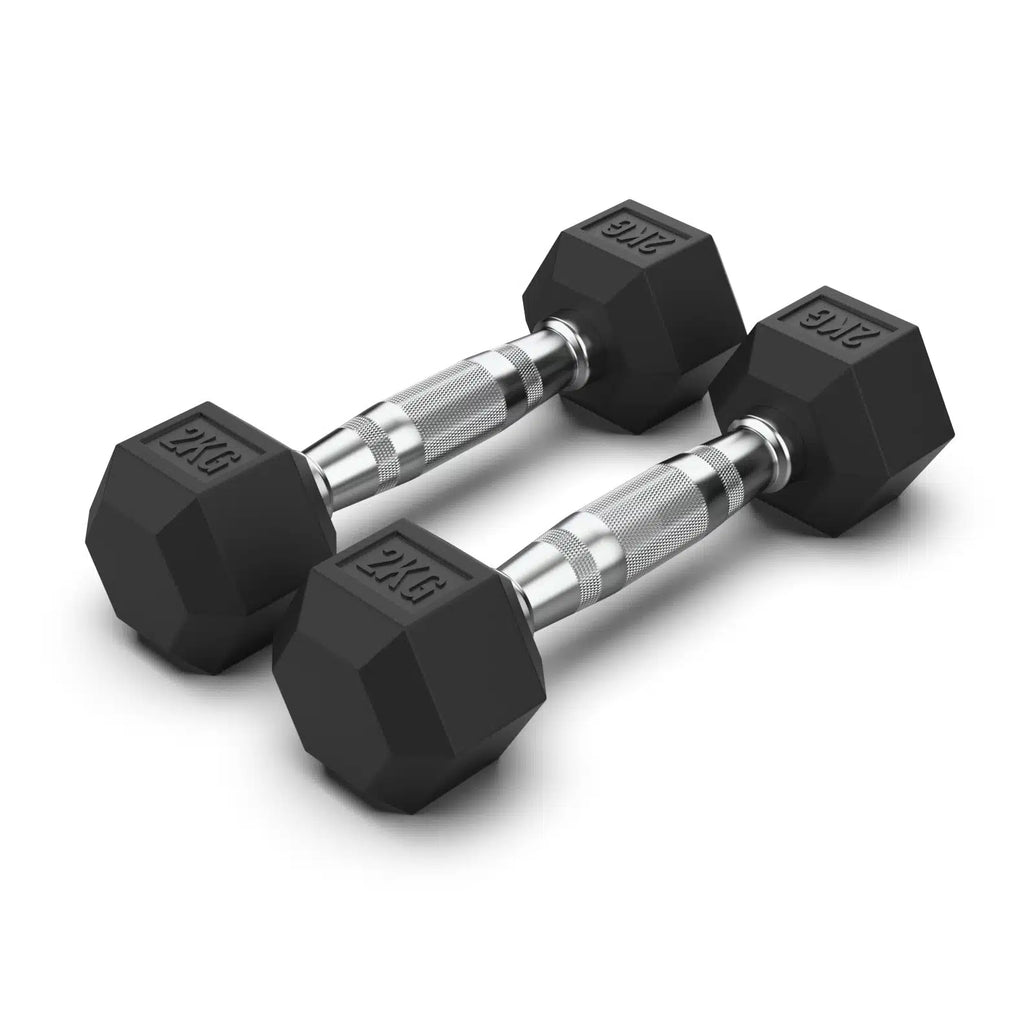
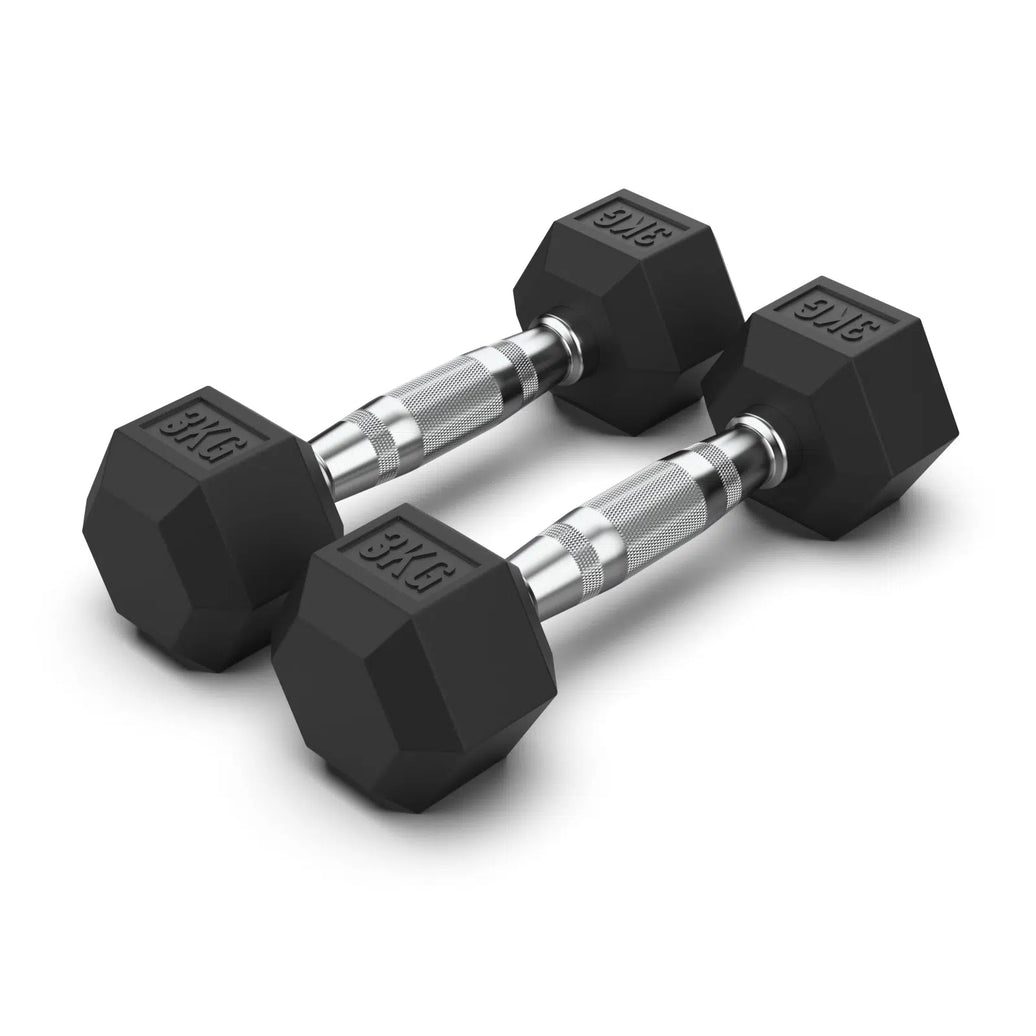
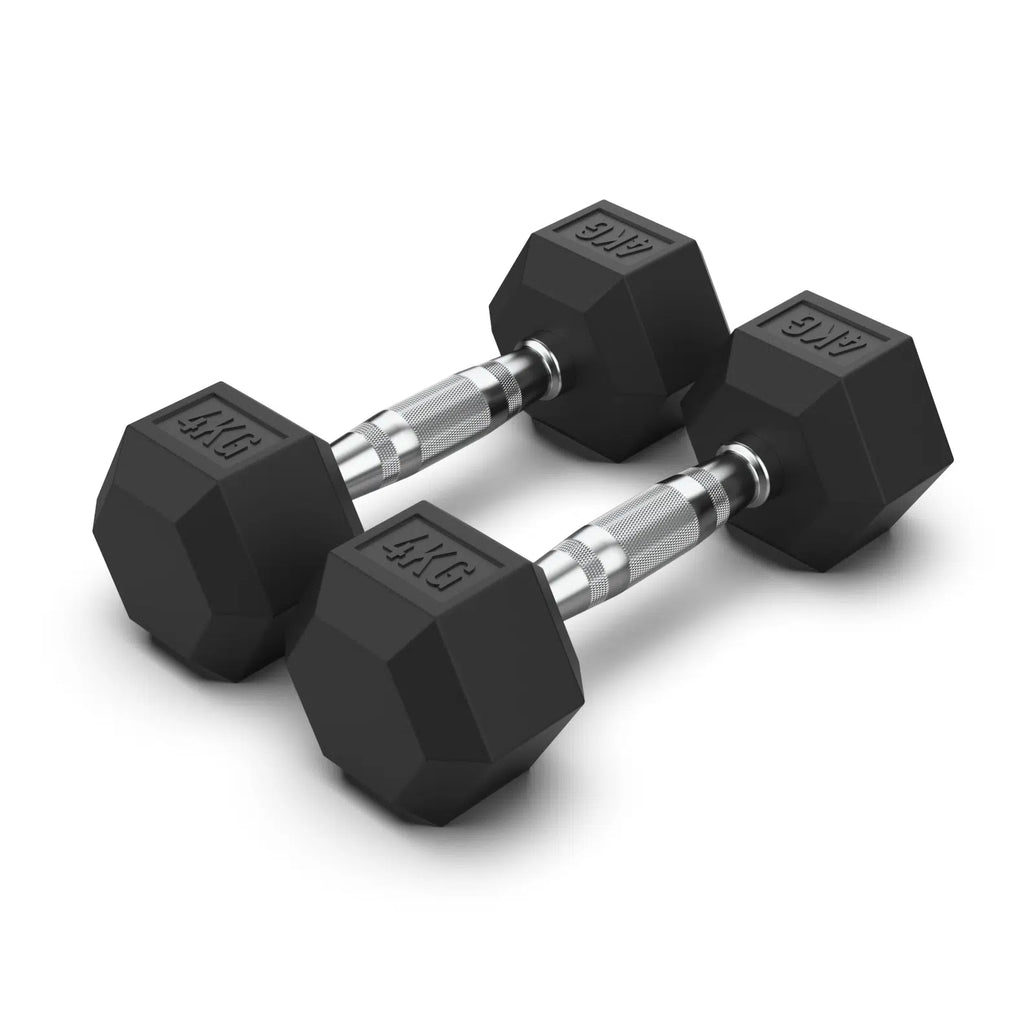
For commercial facilities, individual pairs let you build out the range incrementally and replace damaged pairs without replacing the whole set. We stock rubber hex dumbbell pairs across the full range: 1kg, 3kg, 4kg, 5kg, 6kg, 7kg, 7.5kg, 12.5kg, 15kg, 20kg, 22.5kg, 25kg, 27.5kg, 37.5kg, and 50kg.
For home gyms, a complete set is more practical. The 1–25kg Set with Stand covers the full range most home gym users will ever need. The 5–35kg Set with Stand extends that range for stronger athletes. If you need two racks worth of dumbbells, the 5–35kg Set with 2 x 2-Tier Racks is a complete commercial-ready solution in one order.
Dumbbell Storage
The 6 Series Commercial 2-Tier Dumbbell Rack is the standard for commercial facilities — solid, accessible, and keeps the floor clear. For smaller collections, the 1–10 Dumbbell Rack Tree is a compact alternative that works well in home gyms and PT studios.
Kettlebells: A Different Kind of Free Weight
Kettlebells aren't just dumbbells with a handle in a different place. The offset centre of mass changes the mechanics of every exercise — swings, cleans, snatches, and Turkish get-ups are movements that simply don't translate to dumbbell equivalents. The ballistic nature of kettlebell training also produces a cardiovascular demand that's hard to replicate with static free weight exercises.
A study published in the Journal of Strength and Conditioning Research found that kettlebell training produced significant improvements in both strength and aerobic capacity simultaneously — a combination that's difficult to achieve with conventional free weight training alone. (Jay et al., 2011)
Cast Iron vs. Competition Kettlebells
Cast iron kettlebells are the traditional option — the size of the bell increases with weight, which is fine for most training purposes. Our cast iron range covers 6kg, 8kg, 10kg, 14kg, 16kg, 20kg, and 24kg.
Competition kettlebells are a different proposition. The bell is the same size regardless of weight — which means your technique doesn't change as you move up in load. For anyone doing serious kettlebell sport training or high-volume kettlebell work, this consistency matters. We stock competition kettlebells individually — 12kg and 16kg — and in sets: 8/10/12kg, 12/16/20kg, 16/20/24kg, 24/28/32kg, and the full 8–32kg Complete Set for facilities that want the whole range in one order.
A 3-Tier Kettlebell Rack keeps your bells organised and accessible — particularly useful in commercial environments where kettlebells tend to end up scattered across the floor.
Accessories That Complete the Setup
Collars
Non-negotiable for barbell work. Our Magnetic Barbell Locking Collars are fast to use and hold firmly under load. Keep a pair on every bar in your setup.
Barbell Jacks
Loading and unloading a deadlift bar from the floor without a jack is unnecessary wear on your lower back before you've even started the session. The Single Barbell Jack handles most situations. The Double Deadlift Jack is worth having in commercial environments where multiple bars are being loaded simultaneously.
Landmine
The Landmine Core Trainer is one of those attachments that looks simple but opens up a lot of training variety — landmine presses, rows, rotational work, and single-leg exercises that are difficult to load effectively any other way. It anchors to the floor and accepts a standard Olympic barbell sleeve. A useful addition to any free weight setup.
Building a Free Weight Setup: Where to Start
The temptation is to buy everything at once. Resist it. A focused free weight setup built in the right order will serve you better than a sprawling collection of equipment that doesn't quite work together.
Start with a barbell and a bumper plate set — that covers the big compound movements. Add dumbbells next, starting with the range you'll actually use rather than buying 1kg through 50kg on day one. Kettlebells come after that if your programming calls for them. Specialty bars like the trap bar and EZ curl bar are worthwhile additions once the basics are covered.
For commercial facilities, think about the ratio of equipment to members at peak hour. A single dumbbell set shared across a busy floor creates bottlenecks. Two sets of the most-used weights (typically 10–25kg) is a better investment than one complete set from 1–50kg.
Frequently Asked Questions
Are rubber hex dumbbells better than chrome dumbbells?
For most gym environments, yes. Rubber hex dumbbells are quieter, protect the floor when set down, and don't corrode in humid conditions — which matters in Brisbane's climate. Chrome dumbbells look great but require more maintenance and are less forgiving when dropped.
What weight kettlebell should I start with?
It depends on your training background, but a common starting point is 12–16kg for men and 8–12kg for women for swing-based movements. Kettlebell technique matters more than load — starting lighter and building the movement pattern is a better approach than going heavy too soon.
Do I need bumper plates if I'm not doing Olympic lifting?
Not necessarily, but they're still a good choice for deadlifting from the floor. The ability to set the bar down without worrying about plate damage or floor damage is genuinely useful, even if you're not dropping the bar from overhead. If budget is a constraint, PU plates for pressing and bumpers for pulling is a practical split.
How much dumbbell range do I need for a home gym?
The 5–35kg range covers the vast majority of exercises for most people. If you're a beginner, the 1–25kg set is plenty to start. You can always add heavier pairs later as your strength develops.
Come and See the Range
We're based in Brisbane and stock the full free weight range — from a single kettlebell to a complete commercial dumbbell setup. Browse everything online or get in touch if you want to talk through what suits your setup. No pressure, just straight advice.